Francis Halzen wins 2026 Nobel Prize in Physics for IceCube neutrino observatory
The University of Wisconsin-Madison physicist led the effort to turn Antarctic ice into a detector that records high-energy neutrinos arriving from far outside our galaxy.
Key points
- 1Francis Halzen of the University of Wisconsin-Madison won the 2026 Nobel Prize in Physics for his role in IceCube.
- 2IceCube uses a cubic kilometer of Antarctic ice with 5,160 light sensors on 86 cables and began operating in 2011.
- 3In 2017 a high-energy neutrino was traced to a source for the first time: the blazar TXS 0506+056.
- 4Halzen proposed a South Pole neutrino observatory in 1988; a smaller detector, AMANDA, came before IceCube.
- 5According to Ars Technica, the National Science Foundation committed $53 million over five years to keep IceCube running.
Full story
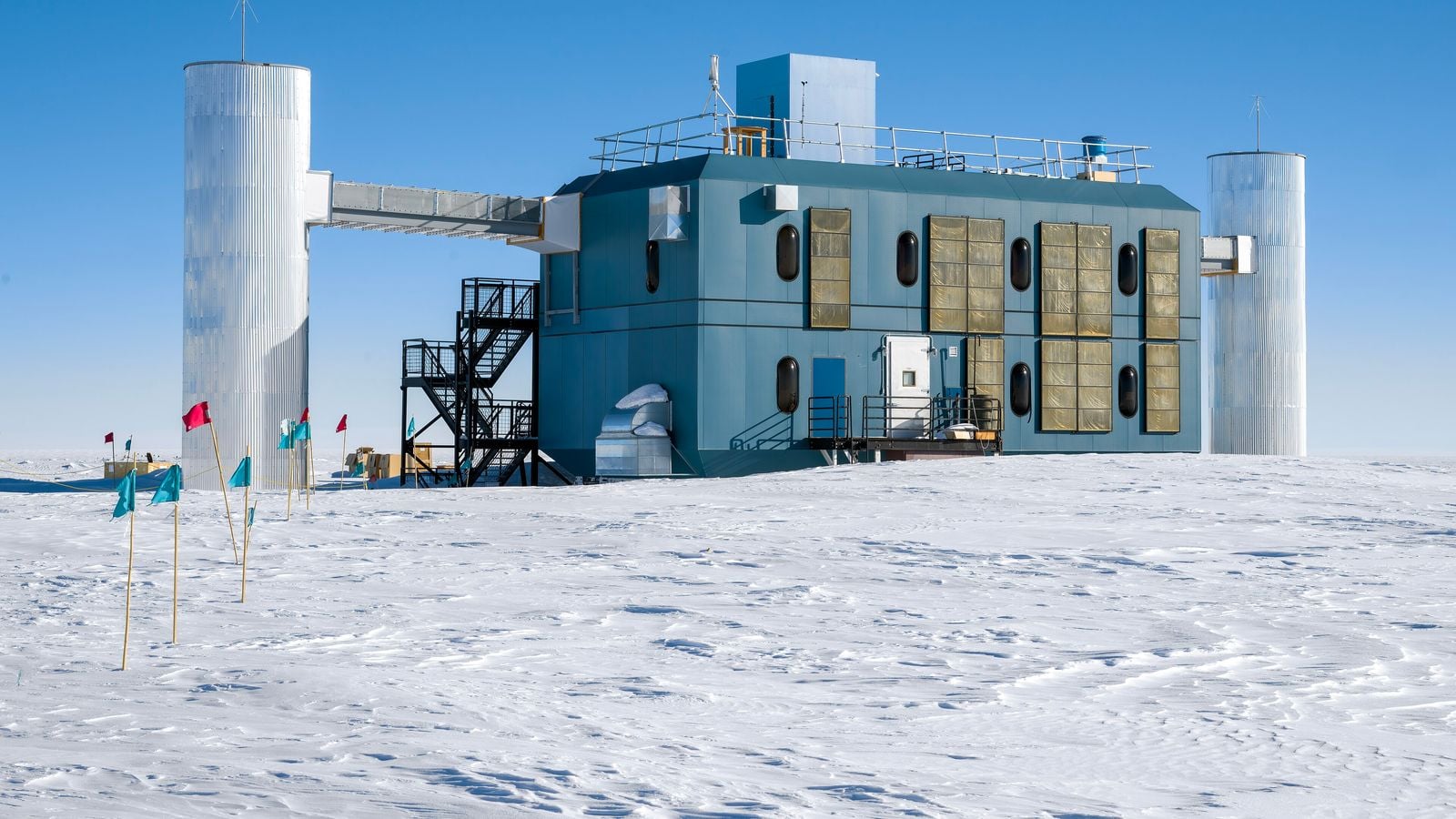
The 2026 Nobel Prize in Physics goes to Francis Halzen of the University of Wisconsin-Madison, Ars Technica and Nature report. According to Ars Technica, the prize recognizes his “decisive contributions to the IceCube Neutrino Observatory” and the discovery of high-energy neutrinos produced by astrophysical sources. Halzen drove the design and construction of IceCube, a detector at the South Pole that uses a cubic kilometer of Antarctic ice to record neutrinos from deep space.
Speaking by phone from Italy to the news conference in Stockholm, Halzen said “It was a great surprise, and I obviously didn’t expect it,” and stressed that the work came from a “large collaboration”. Particle physicist Danielle Norcini of Johns Hopkins University called him the scientific visionary behind the project, and American Institute of Physics CEO Michael Moloney said Halzen had led a decades-long effort to make Antarctic ice work as a neutrino telescope.
The Belgian-born Halzen proposed a neutrino observatory at the South Pole in 1988. Ars Technica reports that he merged two earlier proposals, one using water as a detection medium and one listening for neutrino signals in Antarctica with radio receivers, and concluded that ice would work even better. His team melted holes roughly a kilometer deep with hot water and lowered cables carrying light sensors into them. A first detector, AMANDA, was hampered by bubbles in the upper ice that scattered light; the ice proved very pure below 1400 meters, but AMANDA was too small, and IceCube took its place.
IceCube began operating in 2011. Its 5,160 light sensors hang on 86 cables in the ice and pick up the blue and ultraviolet light given off when a passing neutrino strikes an atomic nucleus. Halzen said it took only two years to show that the detector could see neutrinos from beyond the atmosphere. In 2014 it recorded three neutrinos of record energy, nicknamed Bert, Ernie and Big Bird. In 2017 a high-energy neutrino was traced for the first time to a specific source, the blazar TXS 0506+056; Nature describes this as IceCube's first multi-messenger discovery. In 2022, after analyzing ten years of data, the team reported an excess of 79 neutrinos that made the active galaxy Messier 77 a strong candidate for a neutrino source.
The observatory is still growing. Ars Technica reports that an upgrade finished in February added five strings of sensors near the bottom center of the array, along with 600 new light sensors and calibration instruments, and that the National Science Foundation committed $53 million last month to keep it running for the next five years. Halzen said the results so far still fit Standard Model neutrino physics, which he would like to see broken, and joked that he hopes the prize will help a proposal he is working on get approved.
Why it matters
Neutrinos rarely interact with matter, so they can cross the universe largely unchanged and carry information that light cannot. IceCube showed that high-energy neutrinos from outside our galaxy can be detected and traced back to their sources, adding a new signal to multi-messenger astronomy alongside telescopes and gravitational-wave detectors. Earlier Nobel prizes for neutrino research, in 2002 and 2015, honored work on solar neutrinos and on neutrinos changing from one flavor to another.
Timeline
· Published
Topics#Nobel Prize#IceCube#neutrinos#physics#Francis Halzen
Sources
This story draws on the following sources. Read them for full context.
- 1Royal Swedish Academy of Sciences (nobelprize.org) · Primary sourcePress release: The Nobel Prize in Physics 2026www.nobelprize.org
- 2Ars Technica · News reportNeutrino physicist wins 2026 Nobel Physics Prizearstechnica.com
- 3Nature · News reportAstronomy’s ‘adrenaline junkies’: Nobel prize captures the thrill of neutrino physicswww.nature.com