Nobel Prize in Chemistry 2026 goes to Kagan and Soai for work on how one-handed molecules can emerge
The Royal Swedish Academy of Sciences honours Henri B. Kagan and Kenso Soai for finding non-linear effects and autocatalysis in asymmetric organic synthesis, work it says explains how homochirality can arise.
Key points
- 1Henri B. Kagan (Université Paris-Sud) and Kenso Soai (Tokyo University of Science) share the Nobel Prize in Chemistry 2026, worth 12 million Swedish kronor.
- 2According to the Academy, Kagan's 1986 work showed how to obtain a larger excess of one mirror image than previously thought possible.
- 3The Academy says Soai's key 1995 publication described a reaction with homochiral potential, and that in 2003 he presented one yielding only a single mirror image.
- 4Nature reports that in Soai's 1995 experiment an initial 2% excess of one form was amplified to 87%.
- 5Researchers told Nature the work informs studies of how life's homochirality arose, though the Soai reaction itself cannot run in water.
Full story
The Royal Swedish Academy of Sciences announced on 7 October that the Nobel Prize in Chemistry 2026 goes to Henri B. Kagan of Université Paris-Sud, France, and Kenso Soai of Tokyo University of Science, Japan. The Academy cites them for discovering non-linear effects and autocatalysis in asymmetric organic synthesis, and says the pair found an answer to an old puzzle: how chemistry can come to favour just one of two mirror-image forms of a molecule. Kagan, born 1930 in Boulogne-Billancourt, is Professor Emeritus at the then Université Paris-Sud; Soai, born 1950 in Hiroshima, is Professor Emeritus at Tokyo University of Science. The prize of 12 million Swedish kronor will be divided equally between them. Nature reports that Soai was out shopping near his home when the call reached him.
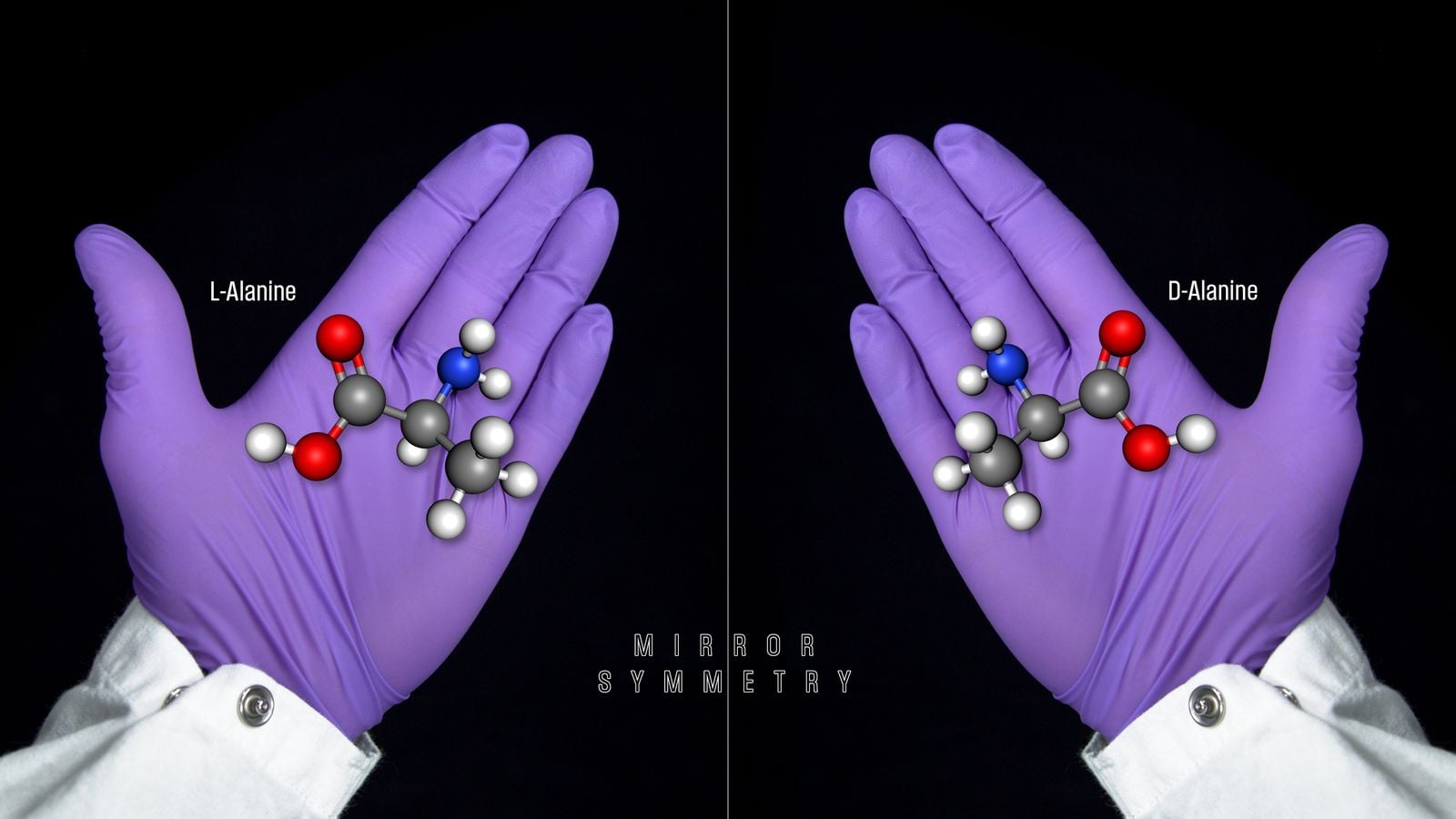
Many molecules, amino acids among them, occur in two versions that mirror each other in the way a left and a right hand do. Living organisms, however, rely on only one of the two, a property chemists call homochirality; the Academy notes the term derives from the Greek for ‘same’ and ‘hand’. According to the Academy, when chemists ran reactions able to yield either form, their test tubes consistently ended up with equal amounts of both. That mattered in practice as well as in theory, the Academy explains, because for molecules meant to act on living beings, such as medicines, only one of the two forms has the desired effect. Nature gives an example: the DNA molecule has a right-handed form, whereas the amino acids found in living things are left-handed.
According to the Academy, Kagan made the first decisive advance in 1986 with a new way of steering chemical reactions, which let him obtain a larger surplus of one mirror image than chemists had believed possible. Nature describes this as showing that a slight imbalance in the handedness of a catalyst can be magnified in the products. Soai built on that. The Academy says a key 1995 publication described how he designed the first reaction with the potential to be homochiral, and that in 2003 he presented a reaction in which only one of the two mirror images formed, something it says nothing but life itself had managed before. In Soai's 1995 experiment, Nature reports, the reaction's product served as its own catalyst, and an initial excess of just 2% of one form grew to 87%.
Nature places the work in a longer line of research. It recalls that the theoretical physicist Charles Frank of the University of Bristol suggested in 1953 that a reaction able to make its own chiral catalyst would be self-reinforcing and let one mirror image win out. The 2001 chemistry laureates William Knowles, Ryoji Noyori and Barry Sharpless used chiral catalysts to push reactions towards one version of a molecule; according to Nature, Kagan and Soai went a step further by designing reactions that produce their own chiral catalyst, putting Frank's idea into practice. Bristol organic chemist Jonathan Clayden told Nature that Kagan demonstrated the principle and the Soai reaction supplied the first real example. Heiner Linke, chair of the Nobel Committee for Chemistry, said the laureates had resolved ‘a chemical mystery that is over a century old’.
Researchers quoted by Nature also see links to the origin of life. Furkan Öztürk, a researcher in prebiotic chemistry at the California Institute of Technology, told Nature the work has drawn wide interest from those trying to explain why biological molecules like amino acids and nucleic acids usually occur in a single chiral form. He cautions that the Soai reaction depends on conditions and reagents that sit poorly with early Earth, noting in particular that it cannot run in water, but he believes its basic principles still have much to teach. Oxford synthetic chemist Stephen Fletcher told Nature he could see the award reviving efforts to establish the reaction's biological relevance.
Why it matters
According to the Academy, the discoveries have been decisive for chemists who design reactions to make pharmaceuticals, where only one mirror image of a molecule has the desired effect; Nature adds that they also matter when designing reactions for materials and even perfumes. Beyond applications, the work offers a chemical account of how a small initial imbalance between mirror-image forms can grow until one dominates, a question tied to why life uses one-handed molecules. Researchers cited by Nature note that the Soai reaction does not suit conditions on early Earth, so whether something similar happened before life emerged is still being investigated.
Timeline
· Published
Topics#Nobel Prize#chemistry#chirality#asymmetric synthesis#catalysis
Sources
This story draws on the following sources. Read them for full context.
- 1NobelPrize.org · Primary sourcePress release: They made chemistry choose a mirror imagewww.nobelprize.org
- 2Royal Swedish Academy of Sciences · Official statementThe Nobel Prize in Chemistry 2026: They made chemistry choose a mirror imagewww.kva.se
- 3Nature · News reportChemistry Nobel for solving mystery of how ‘handed’ organic molecules can emergewww.nature.com