Meta releases Muse Spark Open weights, with Apple support for running it on Mac Studios
Meta has published the weights of an 816-billion-parameter multimodal model aimed at coding and agents, which it says can run locally on two M5 Ultra Mac Studios, under a license with limited commercial terms.
Key points
- 1Meta released the weights of Muse Spark Open, which it calls the most capable US open-weight model to date; performance claims come from Meta.
- 2According to Meta, the natively multimodal model has 816B total and 42B active parameters, a 1M-token context window, and targets coding and agentic work.
- 3Meta says it is the first model in its class to run on two Apple M5 Ultra Mac Studios using MLX; CNBC reported setups of two to four machines.
- 4The model is offered via several hosted API providers and download hubs including Hugging Face, under the Muse Model License with limited commercial terms.
- 5Reporters highlighted heavy hardware needs: TechCrunch, citing Engadget, said at least 1 terabyte of RAM, and CNBC put a 256GB M5 Ultra Mac Studio at $10,799 or more.
Full story
Meta on Thursday made the weights of Muse Spark Open publicly available, describing it as the most capable open-weight model from a US developer so far. According to the company, the model is natively multimodal, has 816B parameters in total with 42B active, and offers a context window of 1M tokens. Meta says it was designed for coding and agentic use, and that it performs well on extended tasks, demanding software engineering and reasoning that spans several steps. CNBC reported that the model is built on a mixture-of-experts architecture. TechCrunch noted that Meta's own evaluation results claim an edge over other popular open-weight models; those performance claims come from Meta and have not been independently verified in the reporting.
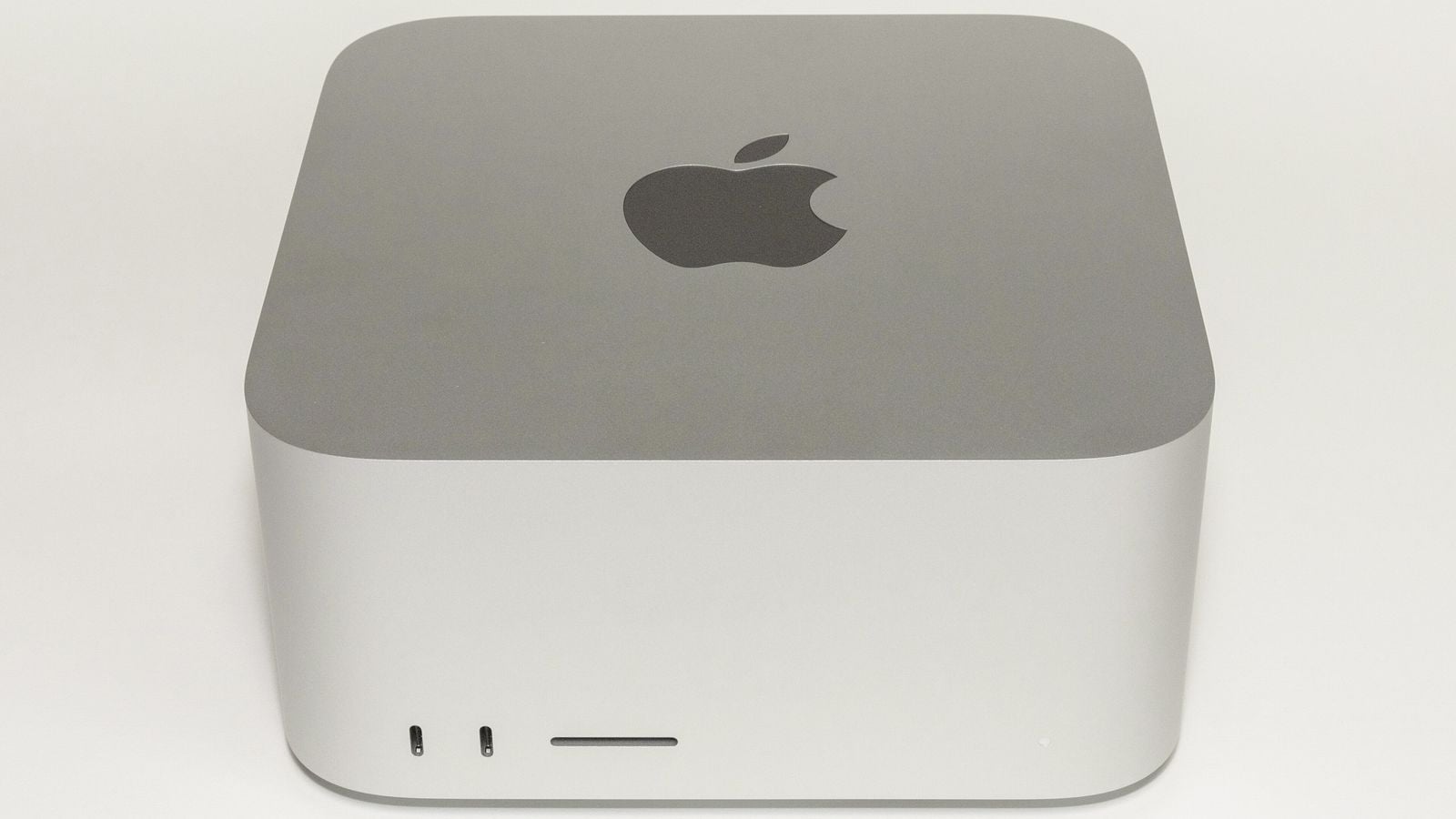
A central part of the launch is local use on Apple hardware. Meta says Muse Spark Open is the first model in its class that can run on a desktop setup of two Mac Studios with the M5 Ultra chip, using the current version of Apple's MLX framework. The company explains that each machine's integrated GPU can draw on up to 512 GB of unified memory, so a pair can hold the full model, and it cites memory bandwidth of 1.2 TB/s. Meta said it tested on-device agent workflows with its Muse Code tool, including shipping fixes and features to the open-source Mastodon app Ice Cubes and operating the DaVinci Resolve video editor to pick out and vertically crop footage. The Verge and CNBC reported that Apple also published technical material on MLX, which CNBC said covers splitting open models across several machines.
Beyond Macs, Meta says the model can be used through hosted API providers including Together AI, OpenRouter, Groq, Fireworks AI, Baseten, Modal and Nebius, while the weights can be downloaded from Hugging Face, Amazon SageMaker AI, Microsoft Foundry Models and Google Cloud Model Garden. The company lists support for inference engines such as vLLM, SGLang, llama.cpp, TensorRT-LLM and MLX, with optimizations for chips from NVIDIA, AMD, Intel and Apple. Meta also says custom Helion GPU kernels in SGLang deliver kernel-level speedups of 1.03-3.95× on NVIDIA and AMD GPUs and a 3% end-to-end gain on AMD MI350. The weights are released under the Muse Model License, which Meta says has limited commercial terms that let many developers use the model at no cost. On safety, Meta says the model received extra safety post-training and met the release thresholds of its Meta Superintelligence Scaling Framework, with a full evaluation report still to come.
Reporters pointed out that local use comes with steep hardware requirements. TechCrunch, citing Engadget, said running the model locally requires at least 1 terabyte of RAM. CNBC reported that customers can connect between two and four Mac Studios, that an M5 Ultra Mac Studio with 256GB of memory currently starts at $10,799, and that a pricier 512GB configuration is due later this month. Meta chief AI officer Alexandr Wang told CNBC that many strong open-weight models are too large for most personal computers, but that the memory available in Mac Studios makes running Muse Spark Open practical.
The release also marks a public collaboration between two companies that have long been at odds. According to The Verge and CNBC, Meta CEO Mark Zuckerberg credited Apple and its new CEO John Ternus on X, and Ternus replied by praising how efficiently the model runs on a desktop. CNBC said the work followed months of collaboration, and that representatives of both companies declined to say whether it would lead to a deeper relationship. CNBC also noted that Meta has recently prioritized proprietary models, and that Muse Spark Open is less advanced than its proprietary Muse Wonder. Wang told the outlet, "These aren't the most capable models that we've developed or released", adding that he expects developers to experiment with it at small scale before expanding their use.
Why it matters
The release brings a very large open-weight model within reach of local desktop hardware rather than only cloud services, signals Meta's continued, if secondary, investment in open models, and reflects an unusual public collaboration with Apple. The cost and memory requirements reported so far still put local use beyond most individual users.
Timeline
· Published
Topics#Meta#Muse Spark Open#open-weight models#Apple#MLX#AI coding
Sources
This story draws on the following sources. Read them for full context.
- 1Meta · Primary sourceIntroducing Muse Spark Open, The Most Capable US Open-Weight Model to Dateresearch.meta.ai
- 2TechCrunch · News reportMeta launches an open-weight AI model that runs on Macstechcrunch.com
- 3The Verge · News reportMeta and Apple team up to make Muse AI models run better on Macswww.theverge.com
- 4CNBC · News reportApple and Meta team up to make Muse AI model run on Mac computerswww.cnbc.com