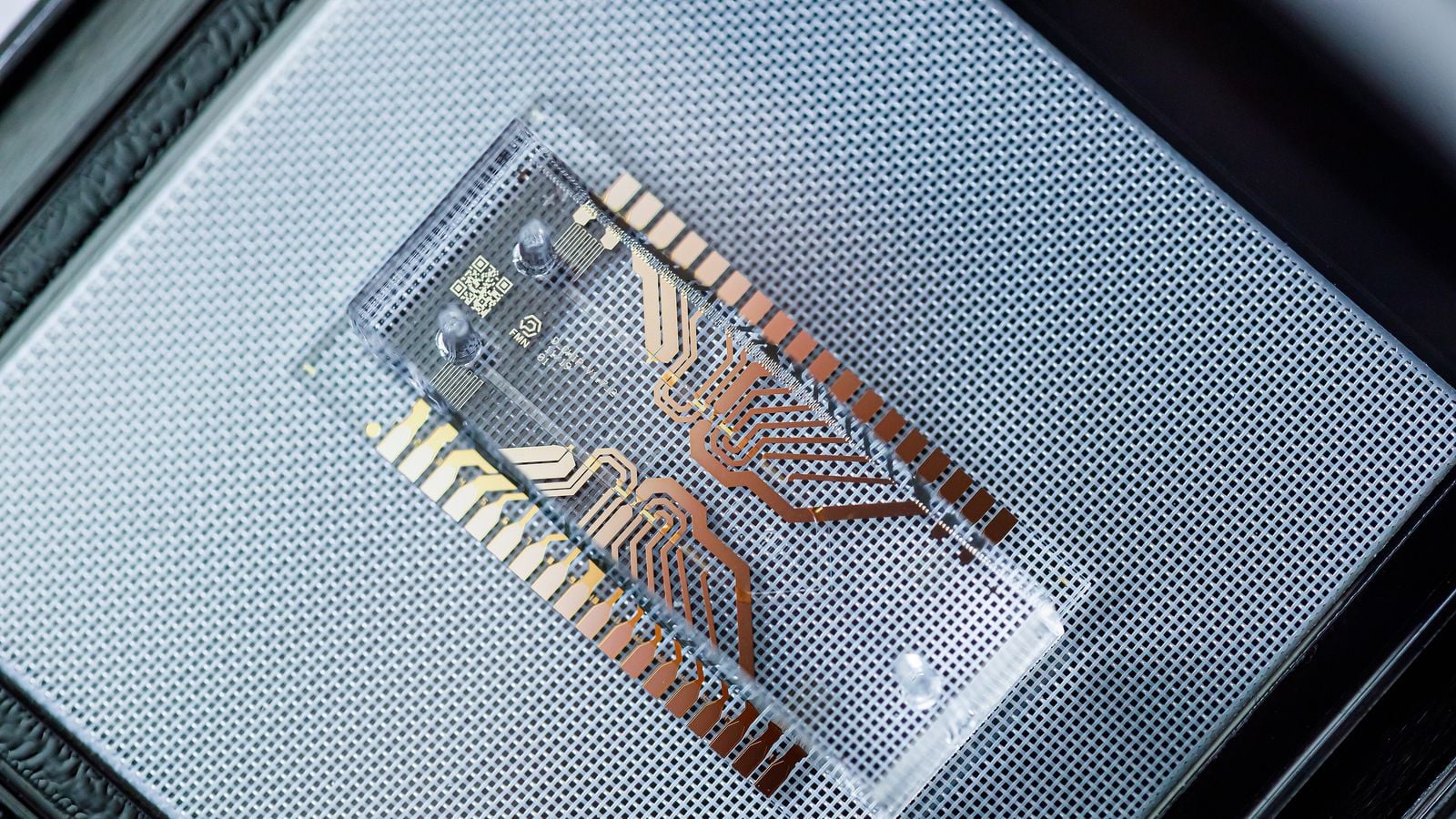
Twisted superconducting diode reaches 27.6% efficiency, which simulations suggest suits qubits
Researchers report that a 1° twist in an NbSe2 superconducting diode raised its efficiency to 27.6%. Their simulations suggest this intermediate value serves qubits better than an ideal diode would.
Key points
- 1Researchers built a superconducting diode from twisted NbSe2 and ran it in magnetic fields applied in the plane of the device and perpendicular to it.
- 2A twist of just 1° lifted the diode efficiency above that of pristine devices, to 27.6%.
- 3The authors' quantum simulations suggest this efficiency, far below the ideal 100%, is optimal for preserving qubit anharmonicity and stabilizing two-level systems.
- 4The paper concludes that maximum rectification is not always the best choice for quantum information.
- 5Nature Communications released the peer-reviewed, accepted paper early on 10 October 2026; this version may still be edited.
Full story
Researchers from the University of Florida, National Cheng Kung University in Taiwan, the Slovak Academy of Sciences and the State University of New York at Buffalo have described a superconducting diode made from twisted NbSe2, aimed at quieter superconducting quantum circuits. The paper, by Han Zhong, Denis Kochan, Igor Žutić and Yingying Wu, appeared in Nature Communications on 10 October 2026. The journal's page calls it peer-reviewed, accepted research that it is releasing early: the open-access version is citable, but it may still be edited before the final Version of Record takes its place.
The problem the team addresses is that signals in superconducting circuits can travel both ways. According to the authors, this allows reflections and back-action to carry noise from the surroundings back into the coherent parts of the circuit, which lowers fidelity. A superconducting diode is nonreciprocal, meaning it treats the two directions differently, so it offers a way to suppress such back-scattering inside the circuit itself. The authors note, however, that the efficiency of these diodes and their integration into quantum hardware have so far been limited.
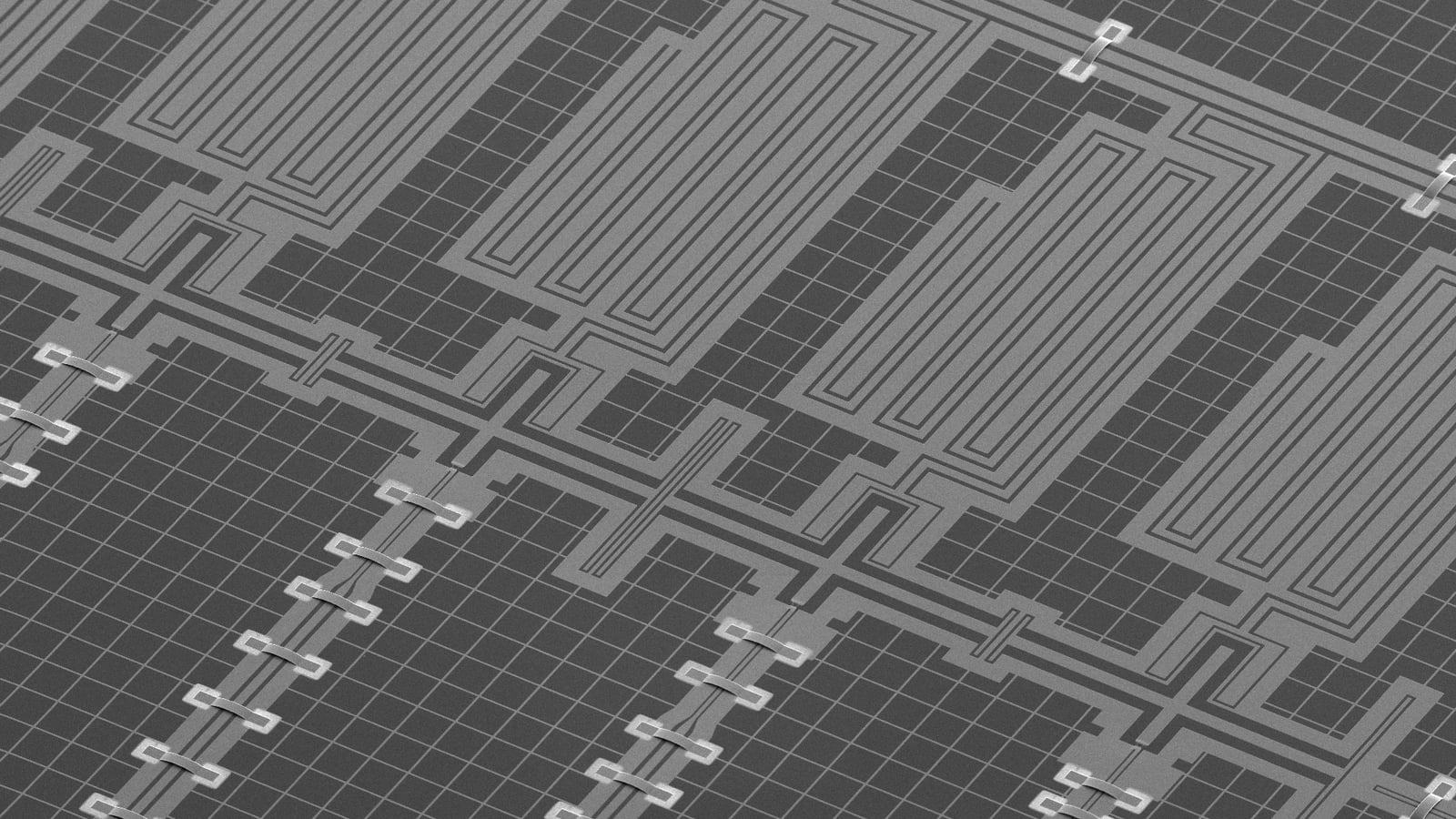
For the experiment, the team built the diode from NbSe2 and operated it in magnetic fields applied both in the plane of the device and perpendicular to it. Introducing a twist of only 1° raised the diode efficiency compared with pristine devices without the twist, to 27.6%, the abstract says.
That figure is well short of the ideal 100%. The authors argue this is not a drawback: their quantum simulations indicate that an efficiency in this middle range is both realistic to achieve in the lab and the best choice for keeping qubit anharmonicity intact and for stabilizing two-level systems. In other words, the paper says that the strongest possible rectification, the one-way effect of a diode, does not automatically serve quantum information best.
The authors present this as a new design principle for the basic properties of twisted superconductors, with low-power, high-fidelity quantum circuits as the goal. Funders listed on the paper include the US National Science Foundation, the US Department of Energy, the Slovak Academy of Sciences, the Slovak Research and Development Agency and Taiwan's National Science and Technology Council. The authors declare no competing interests.
Why it matters
Noise that travels back through superconducting circuits lowers the fidelity of their quantum elements, and the paper points to twisted superconductors as a way to tune diodes that block it. Its main message is that a diode does not have to be as one-directional as possible to help qubits. There are limits: the 27.6% figure comes from the diode experiment, while the benefit for qubits rests on the authors' simulations, and the published text is an accepted early version that may still change.
Timeline
· Published
Topics#Superconductors#Qubits#Quantum circuits#Superconducting diodes#Nature Communications
Sources
This story draws on the following sources. Read them for full context.