Google demonstrates magic state cultivation on Willow, cutting errors about 40-fold
Google Quantum AI says a filtering method for preparing magic states reached 99.99% fidelity on its Willow chip, in work published in Science; the team's preprint reports that 8% of attempts were kept, and larger-scale tests are still to come.
Key points
- 1Google Quantum AI says magic state cultivation cut errors about 40-fold on its Willow processor, in work published in Science.
- 2The arXiv preprint reports a state fidelity of 0.9999(1) while retaining 8% of attempts; Google calls the 99.99% figure a record.
- 3Magic states enable the non-Clifford operations needed for universal quantum computing, are single-use and costly to make.
- 4The team grafted states from a distance-3 color code into a distance-5 surface code on the same hardware.
- 5Google says the technique must still be shown at larger scale and that many technical challenges remain.
Full story
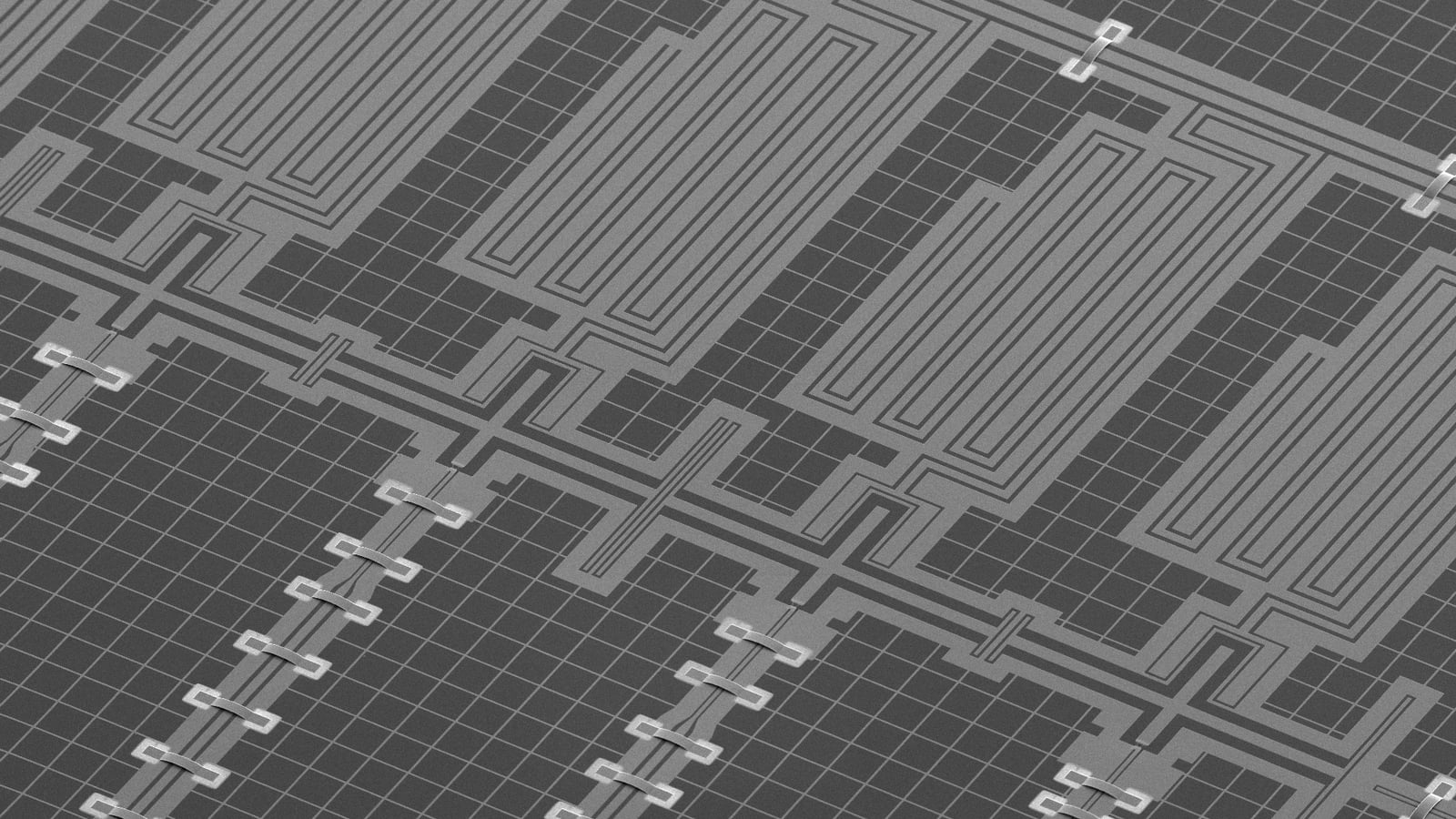
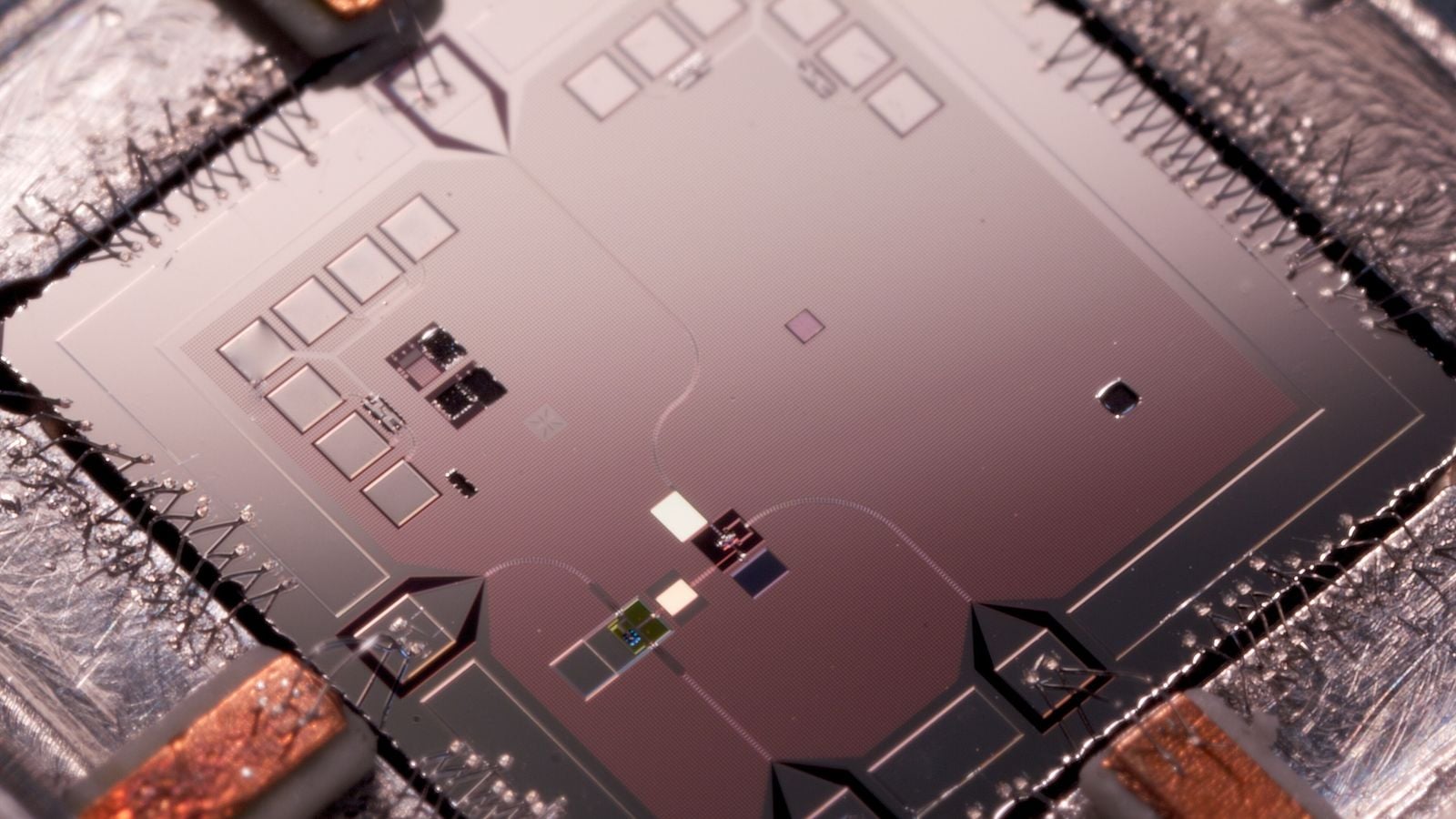
Google Quantum AI says it has shown that magic state cultivation, a technique for preparing a special kind of quantum resource, works on its Willow superconducting processor. According to the company, the method lowered errors by roughly a factor of 40 compared with states prepared without it. Google said the work was published in Science, announcing it this week in a blog post by research scientist Emma Rosenfeld and quantum software engineer Craig Gidney.
Fault-tolerant quantum computers need a universal set of operations, and the so-called non-Clifford gates among them are a significant resource cost for most error-correction designs. One common way to supply them is to first prepare special input states, called magic states, and use them up to perform those operations. Each magic state can be consumed only once, and making them with low error is expensive: Google points to estimates that as much as 95% of a machine's capacity might go toward producing them. Researchers have anticipated this bottleneck since 2004, the company said.
Cultivation was proposed in 2024 by Gidney together with Google colleagues Noah Shutty and Cody Jones, who refined an idea from earlier literature. It acts as a filter: a noisy state is injected into a small area of the chip, then checked through a sequence of coordinated measurements, and any attempt that reveals an error is thrown away. According to the abstract of the team's arXiv preprint, the experiment reached a state fidelity of 0.9999(1) while retaining 8% of attempts, and the team developed a fault-tolerant measurement protocol to put a bound on that fidelity. Google describes the 99.99% logical fidelity for its T-states as a record.
The researchers also moved cultivated states between two error-correcting schemes. Color codes, a newer approach, suit cultivation, while surface codes are the more established method. The team grafted states from a distance-3 color code into a distance-5 surface code, which Google says showed that purified states can survive the handover on its hardware. The company also described months of troubleshooting after early data looked physically implausible: Rosenfeld traced the problem to lab noise from drifting electrical equipment and temperature changes that undermined the team's usual benchmark, prompting added control and a new benchmarking approach in which cultivation is used to measure itself.
Google acknowledged that cultivation still needs to be demonstrated at a larger scale before it becomes realistic for practical machines, and said plenty of technical challenges remain. The retention figure also means that most attempts in the experiment were discarded. A preprint of the paper was posted earlier on arXiv. Google frames the result as a step toward its goal of building a useful, error-corrected quantum computer.
Why it matters
Magic states are required for quantum computers to run general-purpose programs, and producing them has been projected to absorb much of a machine's resources. Google says a cheaper, experimentally tested route could shrink the hardware needed for practical tasks, though the result has not yet been shown at larger scale.
Timeline
· Published
Topics#quantum computing#Google Quantum AI#Willow#quantum error correction#magic states
Sources
This story draws on the following sources. Read them for full context.
- 1Google · Official statementBringing the magic: Google breaks open a bottleneck in quantum computingblog.google
- 2arXiv · ResearchMagic state cultivation on a superconducting quantum processorarxiv.org
- 3Google Research · ResearchMagic state cultivation on a superconducting quantum processorresearch.google